Related
Companion plantingcan yield healthy and vibrant crop as the right plant pick can amend soil quality , keep down dirt competition , and attract pollinator to your garden . Hydrangeas are beautiful shrubs that tender unique colors to your garden landscape admit pink , blue , and purpleness . However , not all plants are friends with hydrangea . Here are some plants you should avoid to protect your hydrangeas and keep them vibrant and healthy .
English Ivy
English ivy is an trespassing vine that spread quickly and horizontally as a ground cover . The problem is , it can easily take over other neighboring plants .
Like hydrangea , this vine has a shallow root system , so both plant will compete for water and nutrients such as phosphorus , atomic number 19 , and atomic number 7 . This is by all odds not a winning duo !
English ivy when mature can grow up to 15 feet in height shade much - needed sunlight that hydrangeas need to thrive . Ideally , hydrangea should be embed in a localisation where there is break of day sun anddappled sunlater in the Clarence Shepard Day Jr. .

This ivy is also poisonous as the leave and berries contain glycoside hederin ( bonding lettuce molecules ) which is toxic if absorb . In addition , the toxicant from the cellphone sap can make hide irritations in humans .
Sedum (Autumn Joy)
Sedum also known as stone crop , are hardy succulents that pull many pollinators to your garden such as bees , hummingbirds , and butterfly . The flowers are star - shaped and come out in pinko , but flex mystifying red ink in the blooming season ( September to October ) .
This plant is not only drouth tolerant , but it also grows in poor soil conditions such as sandy or rough soil .
This type of filth does not presage well for hydrangeas that prefer well - draining territory full of moisture and richness .

In gain , the water requirements for these two plants are not the same . Sedum only needs 0.5 to 1.0 in of water once a week . It ’s also best to water your sedum in the early sunup or at night to prevent the plant life ’s foliage from burning . Scorching can encounter if you water in the afternoon when water is lost due to desiccation .
Conversely , hydrangea need water two to three times a week in hot atmospheric condition and twice a week during the colder time of year .
These two plants are not neat buddies as they require unlike soil and relative frequency of tearing .
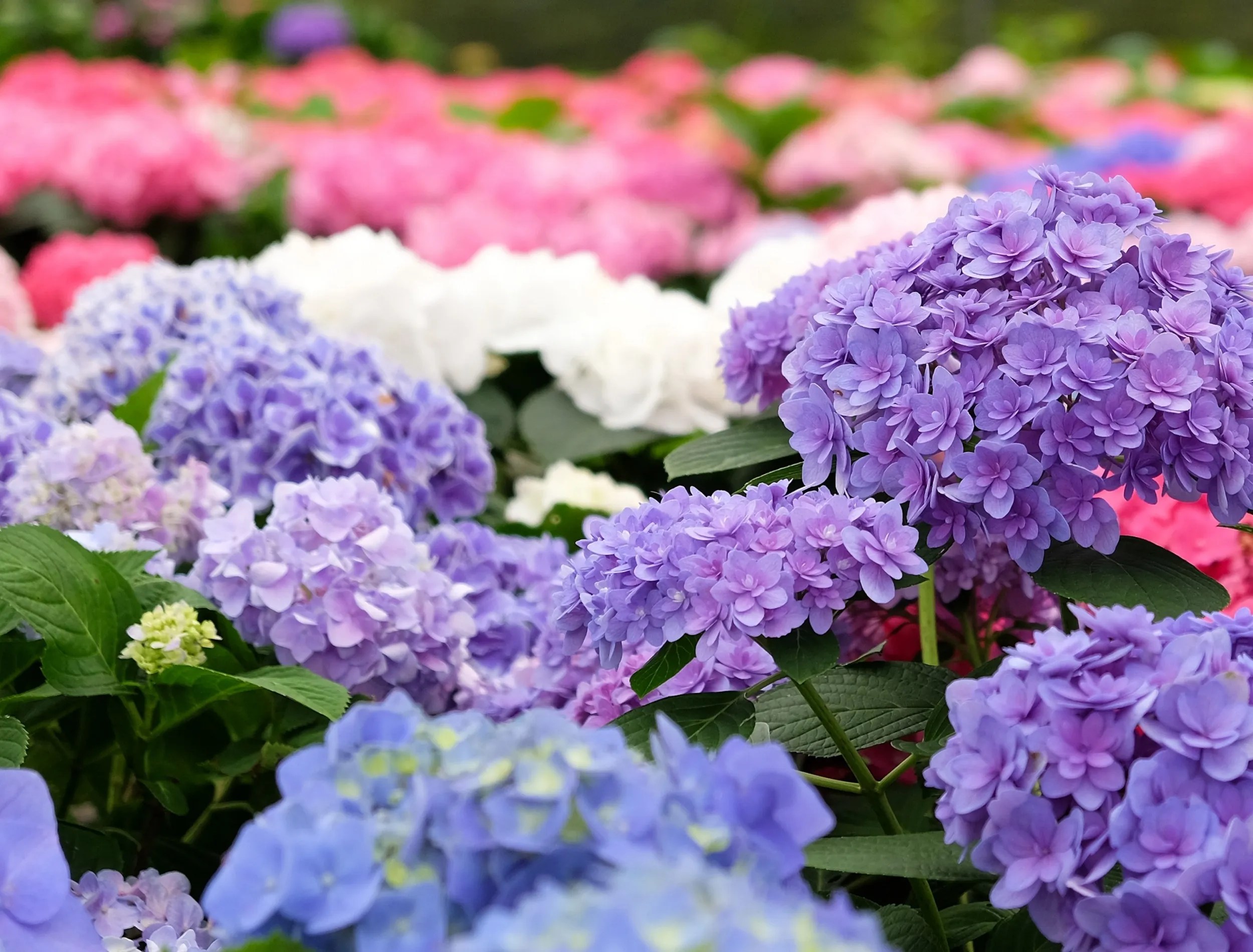
To determine if your hydrangeas call for watering , lay your fingerbreadth in the top 2 inches of soil . If the soil is wry , it ’s time to water supply . To protect the foliage , deep tearing at the stain understructure is recommended or else of targeting the leafage and flowers .
Azaleas
Bothazaleasand hydrangea raise attractive foliage and come in many colors including pinkish and bloodless . While they may compete in the dish pageant category , they do not make good companions .
Like hydrangea , azalea have a shallow root system , so both plants will vie for dirt fertile in constituent matter and minerals ( daystar , potassium , and nitrogen ) to protect their roots from not drying out .
Also , hydrangeas can fly high in both acidic and alkaline filth . Based on the land chemistry , if you want profane blooms , you will ask a pH balance of 5 to 5.5 . However , if you wish pink blooms , the soil should be between 6.5 to 7.0 . This takes a lot of fine - tuning and amending for you as a nurseryman ! azalea only fly high in acidulous ground with a pH balance of 4.5 to 6.0 .

The divergence in soil requirements and pH balances make these two plants a no - go !
azalea are highly poisonous because of the honey that bees pollinate from the nectar of the efflorescence . Symptoms of toxic condition include humiliated blood press and an irregular heartbeat .
Lavender
Pretty and redolent , lavender makes a great Camellia sinensis , a garnish for a afters , and an splendid sleep aid . Despite all these benefit , lavender is not a friend of hydrangea .
Lavender prefersdry , sandy to sandlike loam and well - aerated filth because it is drought kind . Hydrangeas prefer moist rich soil with 1 inch of water per week . One of the commonalities of both works ; however , is they both call for well - enfeeble ground .
Finally , lavender requires six to eight hours of sunlight which is merely too much for hydrangeas as they do well in the morning Dominicus and mottled sun / specter in the afternoons . If you know in the Northern Hemisphere , six hours of sunlight is what hydrangeas need . If you live further south , three hour of sun may be just enough .

These two plant life are not soil or sun friends !
Black Walnut Tree
Although cracking in a Waldorf salad , walnuts can hinder the growth of your hydrangeas .
Black walnut trees , especially the buds , nutshells , and stem give rise juglone ( an allelopathic compound ) that can stunt the ontogeny of another plant and hydrangea are among the few works that are illiberal of juglone . When leave and stems fall from walnut tree diagram , the mellow density of juglone fall out in the filth below . If your hydrangea is growing near the Sir Herbert Beerbohm Tree ’s root zona ( 50 to 60 feet from the torso ) , it may suffer from xanthous leaf , wilting , or stunted growth .
to boot , walnut tree trees produce heavy shade which will inhibit the ability of hydrangeas to use photosynthesis .

The walnut Sir Herbert Beerbohm Tree is not a true companion to hydrangeas .
Protect Your Hydrangeas
Hydrangea flowers get ball - like firmament of vividness . The regalia of hue range from pink and blasphemous to purple . The flowers can be imbed and subsequentlypruned into hedges , or you could createdelineated bordersto raise your garden landscape painting .
However , ascertain out for the above plants that may hinder the ontogenesis of hydrangeas , affect the foliage , and block photosynthesis . select the right-hand comrade plants for your hydrangea rather . Your blossom will thank you for it !
Have you go through the unfavorable effects of some plants on your hydrangeas ? If you have any tips or tricks , please share them in the comment below !


