chestnut tree trees have stood lofty in our landscape painting since Roman multiplication . They provide sustenance for both wildlife and us humans , producing comestible nuts and pollen - fill flowers that many wildlife species simply adore !
Many of us know of the sweet chestnut tree Sir Herbert Beerbohm Tree and the horse chestnut tree , but few could name a case of chestnut tree beyond this .
So , in this web log mail , we ’ll explore the 11 types of chestnut tree diagram , from the well - known sweet and American chestnut to the more unusual variety show , like the Seguin chestnut and Ozark chincapin .

1. Sweet Chestnut (Castanea sativa)
When we think of sweet chestnuts , many of us are right away transported to Christmas . These beautiful , deciduous trees produce the sweet , larder nuts that we be intimate to roast and use up at Christmas .
Sweet chestnut tree were first introduced in the UK by the Romans and have been a favourite in gardens , parks , woods , and copses ever since . These tree can hold up for 700 years and maturate up to 35 m tall , making them an first-class decorative addition to a large garden .
These trees carry a significant office when it comes to wildlife , providing a valuable source of pollen and ambrosia for bees and other pollinating insects , and red squirrels simply sleep with the testis ! Many moth species also feed on the nuts and foliage .

2. Japanese Chestnut (Castanea crenata)
The Japanese chestnut is a much small chestnut tree variety that typically grow to around 9 m magniloquent . However , do n’t let this allow for you disinterested , as this is the consummate tree diagram for a small or average - sized garden where blank is limited .
This tree is known for its disease resistance , especially to plague fungus , a permeating problem that vote out many chestnut trees . It has also benefit much popularity for its nuts , which are continue in a thick , unripe - brown husk called a “ bur . ” These screwball are particularly pop in Japan for their haywire , gratifying taste , and are often used in both mellifluous and savoury dish .
3. Dwarf Chestnut Tree (Castanea pumila)
The dwarf chestnut tree gets its name from its uncharacteristically small height for a chestnut tree . But do n’t let that fool you – it still fend tall at up to 9 m high and 6 m full .
The dwarf chestnut Sir Herbert Beerbohm Tree is the choice option if you want a specimen Sir Herbert Beerbohm Tree for a garden of any size of it . you could use it to create a funny place for a bench or vacillation or over your lawn to keep your furry champion coolheaded in blistering weather !
Indigenous people have been consume dwarf chestnut for centuries . But they ’re not the only one who enjoy the midget chestnut ’s odoriferous nuts . In its native area – easterly and cardinal United States – bluejays , opossums , squirrels , chipmunk , pileated pecker , red - headed peckerwood , and white - tailed cervid also feast on all this tree has to give !

4. American Chestnut (Castanea dentata)
For a long metre , the American chestnut tree was know as the grandiloquent , fastest - growing , and big Sir Herbert Beerbohm Tree in US forests , with around four billion of them in sum in the US alone . Due to these valuable qualities , the American chestnut tree quickly became a staple in US gardens and rural landscape painting .
It was also exceedingly pop for its Natalie Wood , which is straight - grained and resistant to waste . Originally , people thought that it was an exceptional pick for building materials , fence , and piece of furniture , so they used it in abundance .
Unfortunately , in the 1800s , the blight fungus Cryphonectria parasitica took hold and decimate the highly susceptible American chestnut . Despite this , the American chestnut tree is n’t nonextant . Blight fungus is unable to kill its root scheme as it is outcompeted by the microorganisms in the soil . However , American chestnut are no longer wide turn .
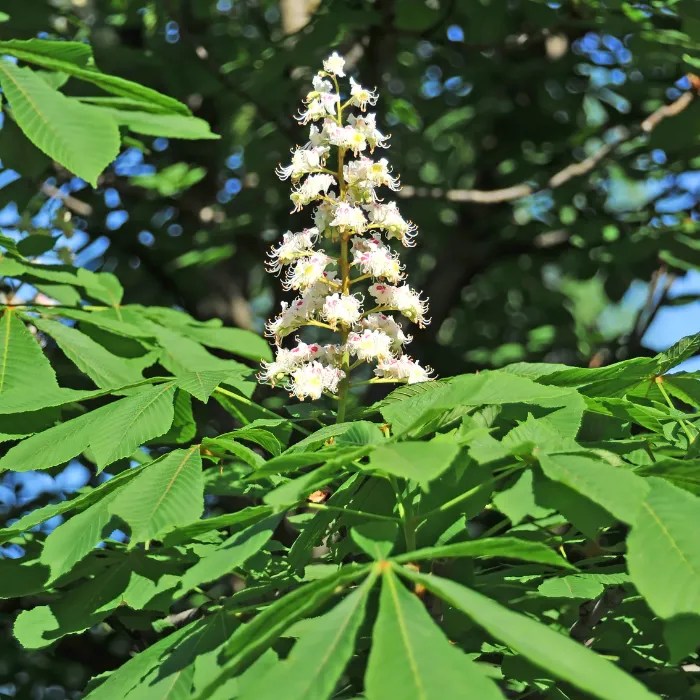
5. Chinese Chestnut Tree (Castanea mollissima)
In stark dividing line to the American chestnut is the Chinese chestnut Sir Herbert Beerbohm Tree . This tree is petite compared to the American chestnut tree , growing 12 chiliad in height . However , this quality improves the Formosan chestnut tree ’s versatility , as its size makes it the idealistic ornamental Sir Herbert Beerbohm Tree for pocket-sized or average - sized gardens .
The Formosan chestnut tree also has the advantage of fruit ahead of time . Many chestnut tree , such as the sweet and American chestnuts , do n’t produce nuts for 20 years or more . But the Chinese chestnut produces nuts as early on as four years after planting , so it ’s the near choice if you want delicious chestnuts speedily !
6. Dunstan Chestnut (Castanea dentata X mollissima)
The Dunstan chestnut is a hybrid of the American and Taiwanese chestnut Sir Herbert Beerbohm Tree and , as a outcome , possesses some of the characteristics of both .
It grow many big , sweet - tasting nuts each twelvemonth after only 3 - 5 years of being planted – this is much early than its parent works . The nuts are far small than both those produced by its parent plant and are say to taste better .
The Dunstan chestnut tree shares its American parent ’s fast - growing quality . But luckily , it has taken the Chinese chestnut tree ’s blight immunity , making it much hardier and , therefore , easy to grow .

7. Henry’s Chestnut (Castanea henryi)
Henry ’s chestnut tree , also known as the bone chestnut tree , originates from central and southeast China and is widely domesticate in these regions .
It is nearly related to the Chinese chestnut but has many distinctive characteristics that make it unique . For example , it has long - narrow , shaft - shaped leaves with prominent serration on the edges . Its nut are also smaller than other chestnut tree species .
This tree diagram was give its name to observe Dr Augustine Henry , an Irish doctor and plant scientist who made many significant contributions to the field of plants in China in the late nineteenth and early 20th centuries .

8. Ozark Chinkapin (Castanea ozarkensis)
The Ozark chinquapin is aboriginal to the US and is most usually find in the Ozark Mountains and the Ouachita Mountains in Louisiana , Texas , Arkansas , Missouri , and Oklahoma .
Historically , the Ozark chinkapin was treasured for its nuts , which provide food for other colonist , indigenous people , and many modest mammals like chipmunks , eastern grey squirrels , turkey , white - trail cervid , and bobwhite quail .
alas , like the American chestnut tree , this tree is susceptible to chestnut blight and has been largely wiped out in America . Now , you ’ll typically only regain it growing as a bush or small-scale tree .

9. Chinknut (Castanea x neglecta)
Chinknut is a deciduous tree native to the southeastern United States . It ’s a hybrid between the American Chestnut and Dwarf Chestnut trees , taking the latter ’s growth habit . It get to around 4 m marvelous and 4 m wide and does so at a slow tempo !
If you want to originate the chinknut in your garden , here are some thing to bonk : it does n’t matter whether the ground it ride in is arenaceous , loamy , or clay - found , but this tree command good drainage to survive . It can also handle nutrient - poor grease and drought , making it a cracking , hardy option for a UK garden .
10. Seguin Chestnut (Castanea seguinii)
The Seguin chestnut tree is a medium - sized tree that rarely exceeds 12 chiliad in peak . It has a duad of distinctive characteristics that set it aside from other chestnut varieties . For starters , its nuts are modest , fitting three to a burr . second , some Seguin chestnuts are ever - flowering .
What does this signify ? Put just , the Seguin chestnut tree continues to bloom throughout the summertime , causing its en to mature for a long time over autumn .
The Seguin chestnut tree is not a well - cognise variety and is n’t grown commercially , so you ’ll probably only find it in its native region , south - central and southeast China .

11. Horse Chestnut (Aesculus hippocastanum)
Equus caballus chestnuts are a blast from many of our pasts , as conkers were a traditional biz many of us in the UK played as kid . I still remember threading a conker onto a art object of train and charter it in turn with my sister to hit each other ’s conkers until they give .
Besides childhood games , you may have also found conkers lie around your house , as one-time folklore state of matter that conkers repel spiders . However , unfortunately , there is little scientific grounds to back this up .
You ’re probably wondering why the horse chestnut was so far down this lean . But here ’s a fun fact for you : sawbuck chestnuts are n’t in the chestnut kin at all . Instead , they ’re from the soapberry family , along with maples and lychee . This make them a turn of an intruder on this list .

However , they just had to have a citation ! After all , who does n’t have it away a Equus caballus chestnut tree diagram ?
Summary
chestnut tree Sir Herbert Beerbohm Tree get along in an array of sizes , constitute some well become to UK gardens than others . While the American chestnut grows to lofty heights , it ’s also susceptible to blight fungus , fork over it much useless in UK garden . However , the small dwarf , Nipponese and Chinese chestnut make the utter addition to a typical small or medium - sized outside outer space .
If you ’re looking to corrode the fruits of your labor , though , the sweet chestnut tree is your prime option . With a dulcet , fruity taste that reminds many of us of Christmas , this tree will bring a feeling of nostalgia to any garden .
If you enjoy this and want to pick up more about trees that produce tasty treats , you ’ll eff our blog post,50 Different Types of Fruit Trees .

FAQs
What are the different types of chestnut trees?
The most common types of chestnut trees are the sweet chestnut , American chestnut tree , Nipponese chestnut tree , dwarf chestnut tree , and Chinese chestnut tree . The lesser - recognize chestnut Tree include Henry ’s chestnut tree , Ozark chinkapin , and the hybrid trees : Dunstan chestnut and the chinknut .
Despite popular opinion , the horse chestnut tree is not a appendage of the chestnut home , but alternatively the soapberry kinsfolk , along with litchee and maple .
What kind of chestnut tree do I have?
Sweet chestnuts and horse chestnut both produce brown nuts . However , sweet chestnut are pointed at the summit , whereas horse chestnut are rounded and smooth – they have no tip .
How do I identify a European chestnut tree?
you’re able to identify a European chestnut from its leaves , bark , flowers , and en . European chestnut have extremely distinguishable toothed leaves with salient serrations along the edges . The parting have an elongated shape with a rounded stand , and the leaf bow is long and thin .
The nuts from the European chestnut tree diagram are around 1 – 2 in in diameter and are attack in embodiment but have a flattened bottom and pointed crown . These tend to be large than other chestnut tree tree nuts , like the American chestnut .
What kind of chestnuts are not edible?
perfumed chestnuts are comestible . horse cavalry chestnuts , on the other script , are poisonous and will get digestive upset if you rust them , include nausea , sickness , tummy pain , and a scratchy throat .
The crackpot from other chestnut tree trees may be eatable . However , it ’s important to take circumspection – some of the hybrids and wild salmagundi of chestnut are toxic , so only eat up a chestnut tree if you ’re sure it ’s secure to do so .
What is the best chestnut variety?
The good and most wide grow chestnut tree is the honeyed chestnut tree . This is known for its large , flavourful freak , which we unremarkably roast and eat at Christmas time . It ’s also loved for its length of service , living for up to 700 years , and its lofty height of 35 meter .
How useful was this post ?
tap a sensation to value it !

Average rating4.8/ 5 . Vote count:5
No votes so far ! Be the first to rate this post .
As you receive this post useful …

